Selling Texas Land or Homes with Wells? Here’s What You Need to Know About the New TREC Water Disclosure
In Texas, nothing is more valuable than water. If you’re preparing to sell real estate, there is an important update you need to be aware of: TREC Form 61-0 (Seller’s Disclosure About Groundwater and Surface Water Rights).
What is TREC? TREC stands for the Texas Real Estate Commission, the official state agency that regulates real estate licensing and sets standard contract forms for buying and selling property across Texas.
Whether you have a bustling rural homestead, acreage, or a suburban property with an old private well, understanding this new official state form, and ensuring your water records are up to date, can make or break a smooth closing.
What is TREC Form 61-0?
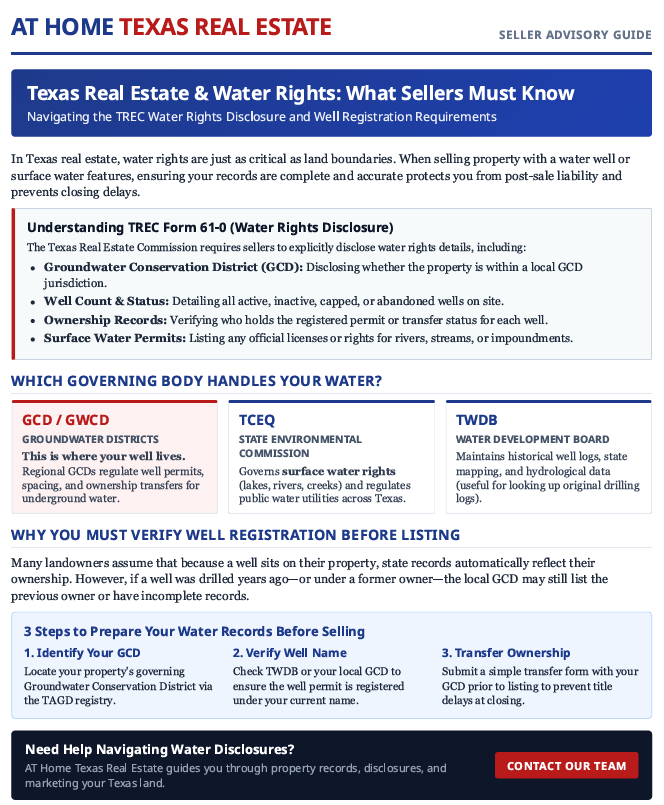
Issued by the Texas Real Estate Commission, this official disclosure requires sellers to disclose what they know about the property's water status, including:
-
Groundwater Conservation Districts (GCDs): Whether the property falls within the jurisdiction of a local groundwater district.
-
Water Well Details: The total number of wells on the property (including active, inactive, capped, or abandoned wells).
-
Well Ownership & Usage: Who owns or operates the well and who benefits from it.
-
Surface Water Rights: Any official permits or certificates administered through the TCEQ for diverting or using surface water (rivers, lakes, creeks).
Who Regulates What? (GCD vs. TCEQ vs. TWDB)
It’s easy to get lost in Texas water acronyms! Here is a simple breakdown:
-
GCD / GWCD (Groundwater Conservation District): This is where your well lives. Local GCDs govern underground water wells, well spacing, and production rules.
-
TCEQ (Texas Commission on Environmental Quality): Governs surface water rights (rivers, streams, impoundments) and environmental standards.
-
TWDB (Texas Water Development Board): The state agency that collects data and maps water resources across Texas (useful for researching historical well logs).
Why You MUST Register Your Well & Update Your Name with Your Local GCD
Many Texas landowners assume that because a well sits on their land, the state automatically knows it's theirs. That isn’t always true.
If a well was drilled years ago, or under a previous property owner, the local Groundwater Conservation District (GCD) may still have the old owner's name on file, or the well may be completely unregistered.
Here is why updating your well registration with your local GCD before listing is critical:
-
Avoid Delayed Closings: When filling out TREC Form 61-0, buyers and title companies will cross-reference state and local databases. Discrepancies in well permits or ownership records can delay buyer financing or title clearance.
-
Protect Your Grandfathered Rights: Many GCDs have rules that exempt existing domestic or livestock wells from strict production limits or meters. Proper registration ensures those grandfathered exemptions transfer smoothly to the new owner.
-
Prove Legal Compliance: Disclosing known active or abandoned wells protects you from future liability after the sale.
3 Quick Steps for Property Owners Before Listing:
-
Find Your District: Use the Texas Alliance of Groundwater Districts (TAGD) map to see which GCD oversees your property.
-
Check Your Well Log: Search the TWDB Groundwater Data Viewer or call your local GCD to verify that your well is registered under your name.
-
Update Records Early: If the well is in a previous owner's name, submit a transfer of ownership form to your local GCD before putting your property on the market.
Let AT Home Texas Real Estate Guide You
Navigating water rights, private wells, and updated state real estate disclosures doesn't have to be complicated. At AT Home Texas Real Estate, we help sellers gather the right records, answer disclosures accurately, and protect their property value.
Thinking of selling? Contact AT Home Texas Real Estate today to get a comprehensive marketing plan and property evaluation!
Categories
Recent Posts